Every year, millions of Muslims observe Ramadan, a month of fasting, prayer, and reflection. The history of Ramadan goes far beyond abstaining from food—it is a sacred period chosen by Allah to prepare the soul, strengthen self-discipline, and foster compassion and community.
This article explores the main aspects of the history of Ramadan: its origins and gradual implementation, the reasons behind its sacredness and importance in Muslim life and how practices like fasting, night prayers, Qur’an recitation, Laylat al-Qadr, and Itikaf shape both personal growth and community bonds.
History of Ramadan (Origin of Ramadan Fasting)
Ramadan fasting is a central practice in Islam, but fasting itself did not begin with Islam. It has a long history that goes back to the earliest divine messages given to humanity.
- Fasting existed before Islam
Fasting is a form of worship that was practiced by earlier nations that received divine revelation before the time of Islam. - The Quran confirms that fasting was divinely prescribed for previous nations
The Qur’an states that fasting was not introduced for the first time with Muslims but was also prescribed for earlier nations who received divine scriptures:
“O believers! Fasting is prescribed for you—as it was prescribed for those before you—so that you may become mindful of Allah.”
- Ramadan fasting was legislated through Islam
More than 1,400 years ago, Almighty God revealed the obligation of fasting the month of Ramadan to Prophet Muhammad (peace be upon him).
- Islamic fasting is similar in principle, not in form
Although fasting existed among Jews and Christians, Islamic fasting differs in its rules, limits, and details. The similarity is in the obligation itself, not in how fasting is practiced. Ibn ʿĀshūr explained that the resemblance mentioned in the verse refers to the essence and obligation of fasting, not its exact form or method. Islamic fasting differs from Jewish and Christian fasting in its rules, limits, and details, even though they all share the same foundational purpose: devotion and self-discipline. - Any similarity between Islamic fasting and practices found in man-made religions can be explained in one of two ways:
- They may be remnants of earlier divine teachings.
- Or they may be human attempts to meet spiritual needs, which remain incomplete due to human limitations.
- They may be remnants of earlier divine teachings.
- Ramadan fasting represents the final divine form of Islam
Islam presents fasting in its final, preserved form, with detailed guidance suitable for all people and all times, since Islam is the final universal divine message.
In summary, the history of Ramadan fasting shows that fasting is an ancient act of worship. Islam did not introduce fasting for the first time but established its final and complete form through the fasting of Ramadan.
Read more: What is Ramadan
When did Ramadan start in the history of Islam?
Fasting the month of Ramadan became obligatory in the 2nd year of the Islamic (Hijri) calendar. Before fasting Ramadan became mandatory, fasting was introduced gradually within the Muslim community:
- In the early period of Islam, Muslims observed fasting on the Day of ʿĀshūrā.
- Later, when Ramadan was prescribed, Muslims were initially given the choice either to fast or to offer compensation, reflecting a gradual approach to legislation.
- After the Muslim community had settled in Madinah and gained stability, Allah revealed the final and complete ruling, making fasting the entire month of Ramadan obligatory with clear rules and boundaries.
This gradual progression shows the wisdom behind Islamic legislation. Fasting was not imposed suddenly but developed step by step until it reached its complete and permanent form as an essential act of worship.
To sum up, Ramadan fasting was made obligatory in 2 AH, following a gradual process that began with the observance of the Day of ʿĀshūrāʾ, before being finalized as a compulsory pillar of Islam.
Read also:
Why did Ramadan start?
Ramadan started to increase piety, awareness of God, and self-awareness. In the fast pace of daily life, people often become absorbed in routine, responsibilities, and material pursuits, gradually losing awareness of themselves, their community, and—most importantly—their Creator.
Ramadan intentionally slows the rhythm of life for an extended period. By changing daily habits such as eating, sleeping, and social routines, the month acts as a powerful reminder of what truly matters. This shift creates space for reflection, mindfulness, and moral reassessment.
Read also:
How to start Ramadan fasting?
Ramadan fasting begins with a clear intention to fast for the sake of God and following the daily practices that define the fast.
To start fasting in Ramadan, a Muslim should:
- Begin the fast at dawn (before sunrise)
Fasting means abstaining, for God, from:
- Eating any food
- Drinking anything
- Marital relations (for married couples)
This abstention continues from dawn until sunset.
- Eating any food
- Maintain the fast throughout the day
The fast is observed during daylight hours with patience, self-control, and awareness of God. - Break the fast at sunset
When the sun sets, the fast ends and is broken by eating or drinking.
Beyond physical fasting, Ramadan is also about spiritual practice and generosity:
- Increase generosity and good deeds
Prophet Muhammad (peace be upon him) was known to be generous at all times, but even more so during Ramadan. - Engage with the Qur’an
The Prophet used to review the Qur’an with Angel Gabriel every night in Ramadan. Because of this, Muslims are encouraged to read, study, and complete the Qur’an during the month. - Pray at night
Night prayers are a major practice in Ramadan and help deepen spiritual focus and connection with God.
To sum up, Ramadan fasting starts by abstaining from food, drink, and marital relations from dawn to sunset, combined with increased generosity, night prayers, and engagement with the Qur’an—making fasting both a physical and spiritual act of worship.
For more about Ramadan, read:
Why Is Ramadan A sacred month?
Ramadan is considered the most sacred month in Islam primarily because of the divine will of Allah to choose this month as a special period for preparing and purifying the human soul.
The main reasons Ramadan is sacred include:
- Divine selection of the month
Ramadan is sacred because Allah deliberately chose it as a time for intensified worship, self-discipline, and spiritual renewal. It is a month designed to prepare the soul through fasting, prayer, reflection, and restraint. - The Qur’an was revealed in Ramadan
Allah chose Ramadan as the month in which the Qur’an was revealed, making it a time directly connected to divine guidance and moral transformation. - A unique spiritual training period
Ramadan functions as an annual spiritual program. By changing daily habits—eating, sleeping, and social routines—people are trained to control desires and elevate their awareness of God. - Angel Gabriel meeting with Prophet Muhammad PBUH to study the Qur’an
Islamic tradition states that Angel Gabriel met Prophet Muhammad (peace be upon him) every night during Ramadan to review the Qur’an, reinforcing the month’s role in learning and reflection.
To conclude, Ramadan is sacred because Allah chose it as a divinely appointed season for preparing the soul, revealing the Qur’an, and cultivating mercy, discipline, and spiritual awareness—making it a unique opportunity for deep personal and communal transformation.
Read:
Why is Ramadan important to Muslims?
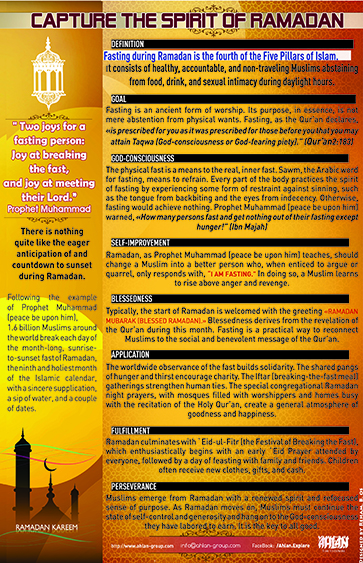
Fasting during Ramadan is a direct act of obedience to Allah. Muslims abstain from food, drink, and other physical needs from dawn to sunset, strengthening devotion and spiritual awareness. This daily discipline helps believers reconnect with God.
Divine Promise of Forgiveness and Salvation
Multiple Hadith highlight that fasting Ramadan wipes away sins and elevates the believer’s spiritual rank. It is a month of divine mercy where sincere worship, repentance, and good deeds are met with Allah’s forgiveness and immense rewards.
One of the last ten nights of Ramadan is Laylat al-Qadr, the night the Qur’an was first revealed. Worship on this night brings rewards greater than a thousand months, inspiring Muslims to pray, reflect, and seek forgiveness.
Seclusion (Itikaf) for Spiritual Focus
Many Muslims spend the last ten days in Itikaf, staying in the mosque to pray, read the Qur’an, and focus entirely on God. This spiritual retreat strengthens habits of devotion and prepares the soul for life beyond Ramadan.
Promotes Mercy, Compassion, and Generosity
Ramadan naturally encourages charity, sharing meals, and helping others. The spiritual focus fosters empathy, making mercy and generosity a central part of the month.
In summary:
Ramadan is important for deepening faith, fostering compassion, uniting communities, and refining the self, with Laylat al-Qadr and Itikaf offering unique opportunities for spiritual growth.
Read also:
Conclusion
To conclude, the history of Ramadan reveals a month of fasting, spiritual reflection, and community bonding that has shaped Muslim life for over 1,400 years. Understanding its origins and practices helps non-Muslims appreciate its deep significance.
Key Points About the History of Ramadan:
- Origins of Fasting: Fasting existed long before Islam through early divine messages, and was practiced by earlier communities, as mentioned in (Quran 2:183).
- Ramadan Fasting Begins in Islam: It became obligatory in the 2nd year of the Hijri calendar after the migration to Madinah.
- Gradual Implementation of Fasting: Early Muslims were asked to fast the Day of ʿĀshūrāʾ before Ramadan became a mandatory pillar.
- Purpose of Ramadan: Prescribed mainly to increase piety, self-discipline, and awareness of God.
- Sacredness & Significance of the Month: Chosen by Allah to reveal the Qur’an and prepare the soul spiritually. Fasting Ramadan wipes away sins and offers a chance for forgiveness and salvation. Also, it encourages compassion, generosity, and unity among Muslims.
Ramadan is more than abstaining from food—it’s a time of reflection, spiritual growth, and community connection.
Learn more about Ramadan’s rich history and its significance in Muslim life today—explore the full story by sending your valuable question to our team right now!