The Last Ten Days of Ramadan hold a special place in Islam—often described as a divine gift to the Muslim community. These final nights are the spiritual peak of the month, where Muslims follow the example of Prophet Muhammad (Peace Be Upon Him) by increasing their worship, performing Itikaf, giving charity, and dedicating more time to the Qur’an.
If you’ve ever wondered what the Last Ten Days of Ramadan are, when they begin, and why they matter so much, the guide below will walk you through everything in a simple, clear way. Don’t miss the opportunity to understand what makes these days sacred and transformative—moments filled with prayer, reflection, and heartfelt supplication.
What Are The Last Ten Days Of Ramadan?
The Last Ten Days of Ramadan are a golden opportunity that Almighty God grants to humanity—days designed to guide people back to His path. For Muslims, these final nights are the best time to renew faith, reclaim the heart, and begin a new phase in life. It is highly recommended to spend these ten days in deep worship, setting aside worldly distractions and focusing entirely on Allah. In other words, the last ten days of Ramadan are the best time to trade with Allah and earn rewards. It’s an opportunity to change a person’s life in this world and the hereafter.
When do the last ten days of Ramadan start in 2026?
Ramadan in 2026 is expected to begin on Tuesday 17 February 2026, and end on the evening of Wednesday 18 March 2026, depending on the sighting of the moon. So, The Last Ten Days Of Ramadan in 2026 are expected to start on Tuesday, March 10. They will end on Thursday, March 19, depending on the sighting of the moon.
Why Are The Last Ten Days Of Ramadan So Important? Virtues of these days

The Last Ten Days of Ramadan are considered the most spiritually powerful days of the entire month. Their importance comes not only from Laylatul Qadr, but also from the fact that Prophet Muhammad (PBUH) devoted himself completely to worship during these days, setting an example for the entire Muslim Ummah.
1. The Prophet (PBUH) Increased His Worship Intensely
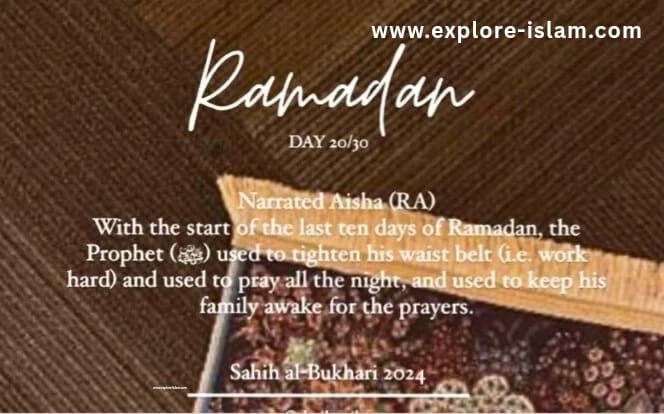
Aisha (RA) reported that during the last ten nights,
“The Prophet (PBUH) would tighten his waist belt, pray throughout the night, and wake his family.”
This shows that these days call for renewed dedication, full focus on worship, and distancing oneself from worldly distractions.
2. Itikaf – A Unique Sunnah of the Last Ten Days
The Prophet (PBUH) performed Itikaf every year during the last ten days—remaining in the mosque, withdrawing from worldly matters, and dedicating himself entirely to Allah. This highlights that these days are designed for spiritual retreat, reflection, and heart purification.
3. Last Ten days are a Time of Forgiveness, Mercy, and Accepted Dua
Muslims increase their Qur’an recitation, charity, dhikr, and dua in these days because they are known for:
- Increased chances of sins being forgiven
- Greater acceptance of supplication
- Multiplication of good deeds
- Special moments of spiritual closeness to Allah
4. Laylatul Qadr Is Found Within These Days
Although Laylatul Qadr is the peak of virtues, its presence elevates the entire last ten days, encouraging Muslims to strive throughout all nights—not just one. Prophet Muhammad (PBUH) said to seek Laylatul Qadr in the odd nights of these final ten days.
5. Last Ten Days are A Divine Opportunity to Transform One’s Life
These days allow every believer to:
- Renew their faith
- Strengthen their connection with Allah
- Repent sincerely
- Start a new chapter in life
To sum up, the last ten days of Ramadan are a divinely gifted window to rewrite one’s spiritual journey and cleanse the heart before Ramadan ends.
For More, read:
Quotes and Hadiths on The Last Ten Days Of Ramadan
There are several quotes about the last ten days in the Quran and hadith.
- The Prophet’s Devotion in the Last Ten Days Of Ramadan: Aishah (May Allah be pleased with her) reported the Propeht’s special concern with the last ten days of Ramadan saying: With the start of the last ten days of Ramadan, the Messenger of Allah (PBUH) would pray all the night, and would keep his family awake for the prayers. He tied his lower garment (i.e., avoided sleeping with his wives) and devoted himself entirely to prayer and supplication.
- Seeking Laylatul Qadr: Prophet Muhammad (PBUH) used to make a special effort to engage in worship and to wake his family up at night, too. It is mentioned in the Hadith: The Messenger of Allah (PBUH) used to observe I’tikaf in the last ten days of Ramadan and say, “Seek Night Of Glory (Laylatul Qadr) in the odd nights out of the last ten nights of Ramadan.”[Al- Bukhari].
Read More: Fasting Ramadan
Significant Acts of Worship In the Last Ten Days Of Ramadan

The Last Ten Days Of Ramadan are our gate to paradise if we take the chance and worship Allah correctly. Ramadan, especially the last ten days, is not for eating and drinking nor wasting time on watching TV. The challenge is to get the most benefit from this month, building a new relationship with Allah by doing good deeds such as:
Having intentions in Ramadan
It is obligatory to make the intention to fast the days of Ramadan every night between sunset and sunrise according to the Shafi’i School of Jurisprudence. According to the Maliki School of Jurisprudence, it is obligatory to make the intention to fast the whole month of Ramadan.
Perfecting your prayers
- Sincerity: Perform your prayers with high fidelity and know that prayers are the bridge between you and your Lord.
- Quality not quantity:When praying Tahajjud, focus on the quality of your prayer, not just the quantity.
- If you aren’t praying your five daily Salah, focus on achieving this as a minimum.
- Traweeh and night prayers: In Ramadan especially, you can perform supererogatory prayers, perform Taraweeh (long prayers during nights of Ramadan). It came in the Sunnah that: It was narrated that ‘Abdullah bin Shaqiq Al-‘Uqaili said:“I asked ‘Aishah about the prayer of the Messenger of Allah (ﷺ) at night. She said: ‘He used to pray for a long time at night standing up, and for a long time at night sitting down. If he prayed standing, he would bow standing, and if he prayed sitting, he would bow sitting.’”Grade: Sahih, Sunan Ibn Majah: 1228
Reciting the Qur’an
This is the month of the Holy Qur’an. Try to make Qur’an recitation a part of your daily routine. If you can’t finish the Qur’an, read as much as possible. If you can’t read as much as possible, even reciting 10 minutes daily is better than nothing. Build a habit that extends after Ramadan.
Remembering Allah, Almighty, through Dhikr and Dua
Don’t let a single moment pass without Dhikr and sincere Dua; there is no need for Wudhu or a Qibla. Whether sitting in traffic or between meetings, you can always be engaged in worship. Before Iftar is the most blessed time of dua, and Allah accepts the Dua of the one who is fasting when he breaks his fast.
Controlling your behavior
During Ramadan try to make a new version of yourself. Look at your weaknesses– where are you weak in your manners? Is it your tongue? Your temper? Your impatience? It came in the Hadith that: the Messenger of Allah (peace and blessings of Allah be upon him) said:
“Have taqwa (fear) of Allah wherever you may be, and follow up a bad deed with a good deed which will wipe it out, and behave well towards the people”. Grade:
Sahih Hassan
For More, Read:
The Last Ten Days Of Ramadan Dua
One of the most acceptable times in the whole year is the Last Ten Days Of Ramadan. Muslims should be smart to get the most benefit these days, asking Allah, Almighty, for forgiveness, for Jannah, for protection from Hellfire, and for guidance and righteousness.
- Seeking Forgiveness: The Dua mentioned in the Hadith of Prophet Muhammad (PBUH) to Aisha: “O Allah, You are Most Forgiving, and You love to forgive, so forgive me.” (Sunan Ibn Majah 3850, Tirmidhi 3513).
- Another Dua for forgiveness: “My Lord, forgive me and accept my repentance. Indeed, You are the Accepting of Repentance, the Most Merciful.”
- Asking for Jannah and Protection from Hellfire:
“O Allah, I ask You for Paradise and seek refuge in You from the Fire.” - Dua for Guidance and Righteousness:
“O Allah, guide me and keep me steadfast.” (Sahih Muslim 2725)
Read more: Ramadan Duas
What Are The Last Ten Days Of Ramadan Called?
The last ten days of Ramadan are primarily known as the “last ten nights” or al-’ashr al-awākhir in Arabic, and they include Laylatul Qadr, also called the Night of Glory. Some sources also refer to them as the “Ashra,” meaning “ten days”.
Conclusion
To sum up, the Last Ten Days of Ramadan are a gift from the Almighty One God to humanity. It is an opportunity to intensify worship and draw closer to the Almighty One God (SWT). Let’s sum up in the following lines:
- What Are The Last Ten Days Of Ramadan?: The last 10 days of Ramadan, a time for extra devotion and spiritual growth.
- When do the last ten days of Ramadan start in 2026? It begins on the 21st night of Ramadan and ends with Eid al-Fitr. The Last Ten Days Of Ramadan in 2026 are expected to start on Tuesday, March 10. They will end on Thursday, March 19, depending on the sighting of the moon.
- The Last Ten Days Of Ramadan Quotes and Hadiths: the most famous Hadith about the Last Ten Days Of Ramadan is the Hadith narrated by Aishah (May Allah be pleased with her) said: With the start of the last ten days of Ramadan, the Messenger of Allah (PBUH) would pray all the night, and would keep his family awake for the prayers. He tied his lower garment (i.e., avoided sleeping with his wives) and devoted himself entirely to prayer and supplication.
- Significant Acts of Worship in Last Ten Days Of Ramadan: take the chance and worship Allah (SWT), seeking his forgiveness. Ways of worship as: Pray Traweeh with sincere heart and fidelity, recite the Quran for ten minutes a day, improve your behaviour, and give charity, especially Zakatul Fitr.
- The Last Ten Days Of Ramadan Dua: The most famous Dua during these sacred nights is asking Allah for Jannah and protection from the Hellfire: O Allah, I ask You for Paradise and seek refuge in You from the Fire.”
- Why Are The Last Ten Days Of Ramadan So Important? These ten nights are a gift from Allah to us; the importance comes from the existence of Laylatul Qadr in the odd nights during the last ten days of Ramadan. On this night, the Holy Quran was revealed to Prophet Muhammad (PBUH). For this Allah made worshiping on this night better than worshiping Allah for one thousand months.
- What Are The Last Ten Days Of Ramadan Called? Al-’ashr al-awākhir in Arabic. Also, some sources refer to them as the “Ashra,” meaning “ten days” in Arabic.
If you need more information about Ramadan, read: What Is Ramadan, Ramadan Eating Rules. Also, feel free to contact us directly@: info@explore-islam.com.