Do you know that Tahajjud prayer is a voluntary night prayer in Islam, performed by Muslims to seek closeness to Allah and earn His pleasure, even amid the challenges of our fast-paced, materialistic lives? Unlike the five daily obligatory prayers, Tahajjud is a recommended act of worship that allows believers to engage in extra devotion, reflection, and spiritual growth during the quiet hours of the night. The Quran and Sunnah emphasize its immense rewards, highlighting its significance as a means to attain tranquility, guidance, and forgiveness.
In this article, you will learn what Tahajjud is, its ruling in Islam, the ideal time to perform it, its spiritual benefits, and the duaas associated with it. The article also explores why some supplications may be delayed, how to maximize their acceptance, and the special significance of Tahajjud during Ramadan, especially in the last ten nights.
What Is Tahajjud?
Tahajjud, in Islam, literally means staying up late at night. Technically, it refers to a voluntary night prayer performed by Muslims, often after having slept for a short while. This special prayer is offered to seek closeness to Allah, earn His pleasure, and gain spiritual benefits beyond the regular obligatory prayers. Tahajjud is highly recommended in Islamic tradition and is considered a source of immense reward and tranquility for those who observe it regularly.
Read also:
What is Taraweeh prayer?
Taraweeh prayer is a special night prayer performed in congregation by Muslims during the month of Ramadan, offered after the Isha prayer. It was practiced by Prophet Muhammad (peace be upon him), who led his followers in Taraweeh for three nights, but on the fourth night, he did not lead the congregation, emphasizing that it is a Sunnah (recommended) prayer rather than obligatory.
Taraweeh is typically performed in sets of four rak’ahs, followed by a short break, which may include a brief Khutbah or reflection, and then another set of four rak’ahs. In some practices, the prayer continues in sets until the end of the night, allowing worshippers to recite the Quran and seek closeness to Allah throughout Ramadan.
Read also:
Is Sleeping Important for Tahajjud?
Sleeping before Tahajjud, the voluntary night prayer, is not a strict requirement to earn its reward from Allah Almighty. However, some scholars note that the prayer is traditionally called Tahajjud only if it follows a period of sleep, since the term linguistically implies rising from sleep at night.
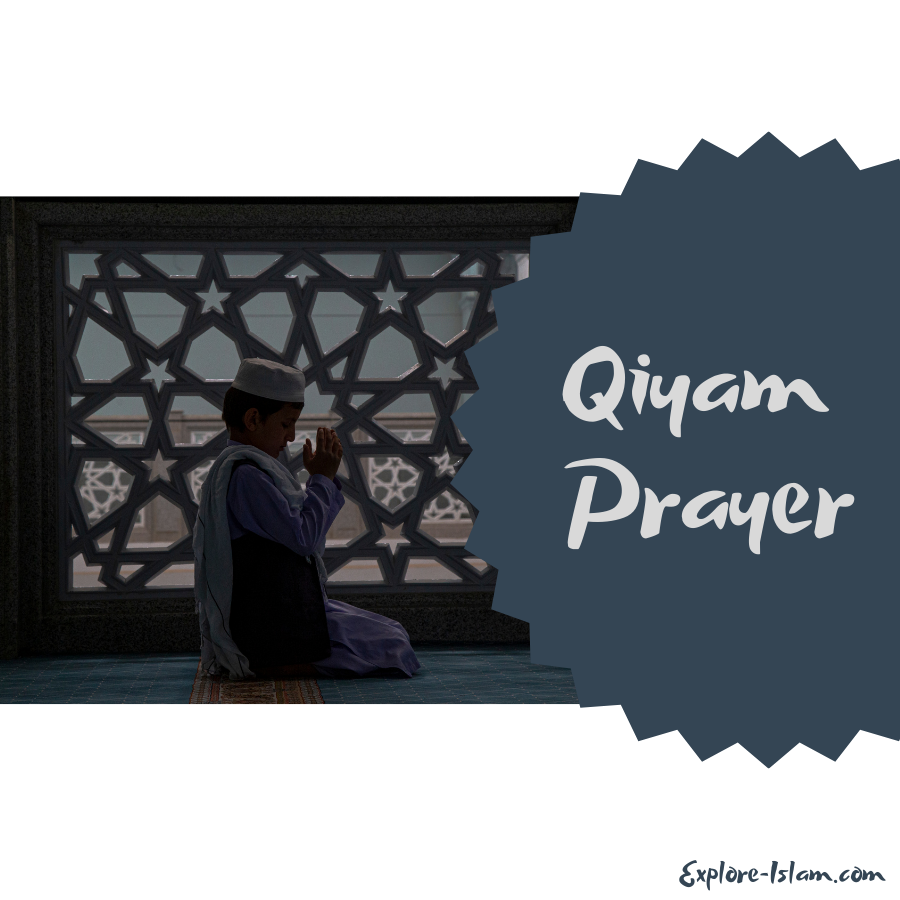
Regardless, the broader category of night prayers (Qiyam al-Lail) includes Tahajjud and other forms of voluntary prayers, whether performed after sleep or not. You can learn more about Qiyam prayers and their significance in our detailed article on the subject.
What Is the Ruling of Tahajjud in Islam?
Tahajjud is classified as a Sunnah Mu’akkadah (confirmed Sunnah) of Prophet Muhammad (peace be upon him). Historically, it was initially obligatory on all Muslims at the beginning of Islam, but after some time, this obligation was abrogated and it became a recommended prayer for those who wish to perform it.
The importance of Tahajjud is emphasized in the Quran, particularly in Surah Al-Muzzamil (73:1-6):
“O you who wraps himself [in clothing], Arise [to pray] the night, except for a little – Half of it – or subtract from it a little, Or add to it, and recite the Qur’an with measured recitation. Indeed, We will cast upon you a heavy word. Indeed, the hours of the night are more effective for concurrence [of heart and tongue] and more suitable for words.”
Prophet Muhammad (peace be upon him) rarely missed Tahajjud, reflecting its spiritual significance. Allah also highlights its reward in Surah Al-Isra (17:79):
“And from [part of] the night, pray with it as additional [worship] for you; it is expected that your Lord will resurrect you to a praised station.”
Tahajjud remains a highly virtuous and spiritually rewarding practice, offering Muslims a unique opportunity for closeness to Allah, reflection, and Quranic recitation during the peaceful hours of the night.
Read more:
What Is the Tahajjud Prayer Time?
The Tahajjud prayer is recommended to be offered every night, or as often as a Muslim is able, after Isha (the obligatory night prayer) and before Fajr (the dawn prayer).
It is preferable to pray Tahajjud during the last third of the night, which is calculated as the final portion of time between sunset and dawn—not simply midnight. Ideally, Muslims perform Tahajjud after some sleep, allowing for a focused and spiritually uplifting experience.
Prophet Muhammad (peace be upon him) emphasized the special blessings of this time. Abu Huraira narrated:
“When it is the last third of the night, our Lord, the Blessed, the Superior, descends every night to the heaven of the world and says, ‘Is there anyone who invokes Me, that I may respond to his invocation? Is there anyone who asks Me for something, that I may give it to him? Is there anyone who asks My forgiveness, that I may forgive him?’”
[Sahih al-Bukhari]
Observing Tahajjud during this blessed time of the night provides Muslims with a unique opportunity for prayers, supplication, and seeking Allah’s forgiveness, making it one of the most rewarding acts of worship in Islam.
Read also:
What Are The Benefits of Tahajjud?
Tahajjud prayer offers numerous spiritual, emotional, and personal rewards for those who observe it regularly. The Quran and Hadith highlight its significance and the immense blessings that Allah grants to the worshippers of the night.
1. Hidden Rewards Guaranteed by Allah for night voluntary prayers
Allah describes the believers who pray at night in the Quran:
“They arise from [their] beds; they supplicate their Lord in fear and aspiration, and from what We have provided them, they spend. And no soul knows what has been hidden for them of comfort for eyes as reward for what they used to do.”
[Quran 32:16-17]
This verse highlights the unseen and immense rewards that Allah has prepared for those who remain devoted in night prayer.
2. Qiyam prayer is an Honor of the Believer
Prophet Muhammad (peace be upon him) said:
“… Remember that the believer’s honour is his praying at night, and his pride is his being independent of people.”
[Al-Haakim]
This Hadith emphasizes that night prayer elevates the believer’s status, instills self-discipline, and strengthens independence from worldly dependence.
3. Tahajjud is a Means for Steadfastness and Spiritual Strength
Allah also mentions the impact of night worship:
“Indeed, worship in the night is more impactful and suitable for recitation.”
[Quran 73:6]
Tahajjud helps fortify faith, improve focus in worship, and provides a calm and reflective time for reciting the Quran.
Tahajjud Prayer Benefits During Ramadan
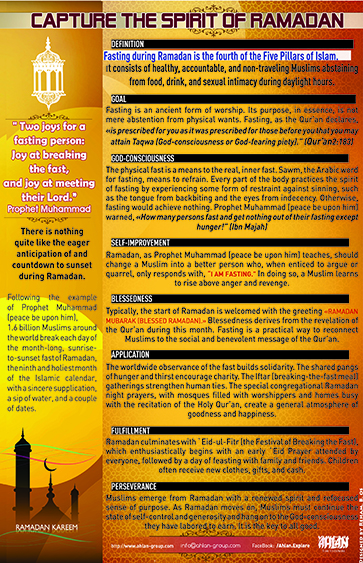
The rewards of Tahajjud are greatly multiplied during Ramadan, especially in the last ten nights. Aisha (may Allah be pleased with her) narrated:
“With the start of the last ten days of Ramadan, the Prophet (peace be upon him) used to tighten his waist belt (i.e., work hard) and used to pray all the night, and used to keep his family awake for the prayers.”
[Sahih al-Bukhari]
Offering Tahajjud during Ramadan, particularly in the last ten nights, is an opportunity for maximum spiritual reward, forgiveness, and closeness to Allah, making it one of the most virtuous acts of worship in Islam.
Read more:
What is Tahajjud Prayer Duaa?
One of the most well-known duaa (supplications) that Prophet Muhammad (peace be upon him) recited at the start of Tahajjud prayer is:
“O Allah, Lord of Jibraīl, Mīkaīl and Israfīl (the great angels), Creator of the heavens and the Earth, Knower of the seen and the unseen. You are the arbitrator between Your servants in that which they have disputed. Guide me to the truth by Your leave, in that which they have differed, for verily You guide whom You will to a straight path.”
While this duaa is highly recommended, during Tahajjud, especially in Sujud (prostration), a worshipper can recite any duaa from the Quran, Hadith, or personal supplications. The beauty of Tahajjud lies in its flexibility, allowing you to ask Allah for guidance, forgiveness, blessings, or any personal need with sincerity and devotion.
Why My Tahajjud Duaa Not Answered?
In Islam, no sincere duaa goes unanswered as long as the believer avoids the barriers that can prevent acceptance, such as earning unlawful income, committing sins, or being hasty in expecting a response.
Prophet Muhammad (peace be upon him) explained the ways Allah responds to a sincere supplication:
“Any Muslim who makes a supplication containing nothing sinful or which involves breaking ties of relationship will be given for it by God one of three things:
- He will give him an immediate answer,
- Or store it up for him in the next world,
- Or turn away from him an equivalent amount of evil.”
[Ahmad]
This Hadith reminds believers that Allah’s wisdom governs the timing and form of the answer. Even if a supplication is not fulfilled immediately, it may be stored as reward in the Hereafter or used to protect the believer from harm, making every sincere Tahajjud duaa valuable and beneficial.
Also, you can know more about how your duaa works by reading this article.
Is There Tahajjud Dua for Success?
There is no specific Tahajjud duaa exclusively for success, but Muslims can make general supplications for ease, guidance, and success. One example is the duaa of Prophet Moses (peace be upon him):
“My Lord! Uplift my heart for me, and make my task easy.”
[Quran 20:25-26]
Another beautiful supplication reported from Prophet Muhammad (peace be upon him) is:
“O Allah, there is no ease other than what You make easy. If You please, You ease sorrow.”
[Sahih Ibn Hibban]
During Tahajjud, a believer can sincerely recite these duaas, asking Allah for success in worldly and spiritual matters, while trusting in His wisdom and timing.
Read also:
Is There Tahajjud Dua for Marriage?
There is no specific Tahajjud duaa exclusively for marriage reported in the Sunnah. However, Muslims can use general supplications for guidance, facilitation, or personal needs, such as those mentioned earlier.
The key to a successful duaa for marriage lies in:
- Sincerity and devotion in your supplication
- Trusting in Allah’s wisdom and timing
- Avoiding barriers that can prevent acceptance, such as committing sins or hasty expectations
By combining heartfelt supplication with consistent Tahajjud prayer and reliance on Allah, a believer seeks blessings, guidance, and facilitation for marriage, trusting that Allah’s response may come in the best form and timing.
Conclusion
In Conclusion, Tahajjud prayer is a confirmed Sunnah that Prophet Muhammad (peace be upon him) and his honored companions consistently observed. They serve as perfect role models for all Muslims, demonstrating the spiritual rewards and discipline of night prayer.
Muslims of all ages, places, and circumstances are encouraged to follow their example to attain steadfastness, spiritual growth, and inner peace. Practicing Tahajjud helps believers strengthen their connection with Allah and experience the tranquility and serenity that comes from sincere worship.
Key points discussed in the article:
- Definition: Voluntary night prayer offered after Isha and preferably in the last third of the night.
- Ruling: Sunnah Mu’akkadah (confirmed Sunnah), highly recommended but not obligatory.
- Timing: Best during the last third of the night; sleeping beforehand is recommended but not required.
- Benefits: rewards, hidden blessings, honor, steadfastness, and closeness to Allah.
- Duaas: General duaas from Quran, Sunnah, or personal supplications can be recited; special times increase acceptance.
- Special occasions: Tahajjud in Ramadan, especially the last ten nights, carries maximum reward.
- Answered duaas: Sincere supplications are always answered in one of three ways—immediate, stored for the Hereafter, or protection from harm.
- Duaas for personal needs: While there are no specific duaas for marriage or success, believers can use general supplications asking Allah for guidance, ease, and blessings.
By following the example of Prophet Muhammad (PBUH), Muslims can nurture their spirituality, find inner peace, and maintain steadfastness in worship.
How do you seek tranquility and peace in your daily life? Share your thoughts and feelings with our team for the best solutions based on the Islamic unique spirit right now!