Have you ever wondered what Ramadan for non-Muslims means and how they can understand it? There are about 7.8 billion people in the world. And around 25.6% of them, 2 billion, are fasting every day for an entire month of Ramadan.
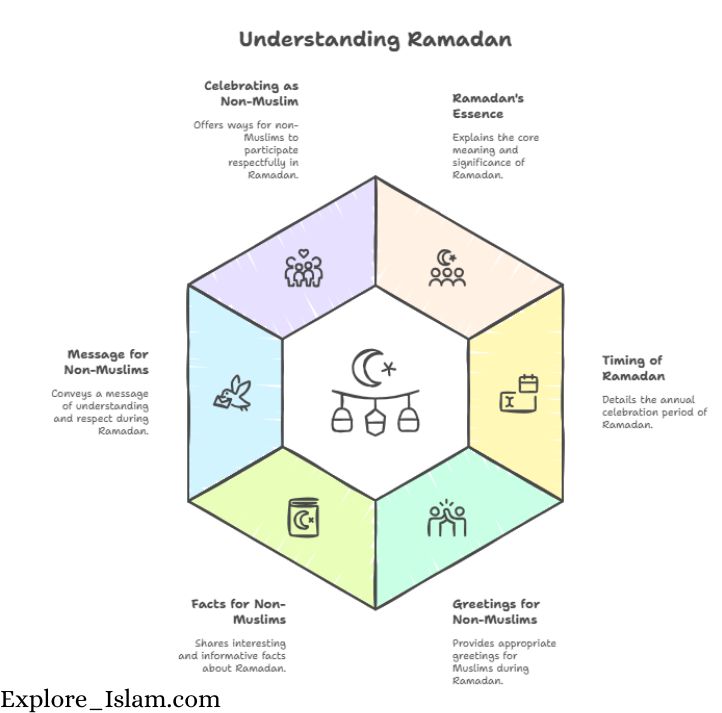
This guide offers a clear overview of Ramadan for non-Muslims, going through when Ramadan is celebrated in the Islamic lunar calendar and why its dates change each year. Also, the article explains what fasting means and its deeper spiritual purpose beyond abstaining from food and drink.
Then the article explores key Ramadan practices such as suhoor, iftar, common greetings, and the importance of dates, before highlighting etiquette tips for interacting with Muslim friends, ways non-Muslims can participate respectfully, and how Ramadan fosters sharing, community connection, and acts of charity.
Ramadan Facts for Non-Muslims
Here are some interesting facts about Ramadan to share with non-muslims that could answer many questions yearly:
Ramadan: The Month the Quran Was Revealed
Ramadan is the month in which the first verses of the Qur’an were revealed to the Prophet Muhammad ﷺ. The Almighty One God says in the Quran (translated):
“Ramaḍân is the month in which the Quran was revealed as a guide for humanity with clear proofs of guidance and the standard ˹to distinguish between right and wrong˺.”
(Quran: 2:185)
What Fasting in Ramadan Really Involves
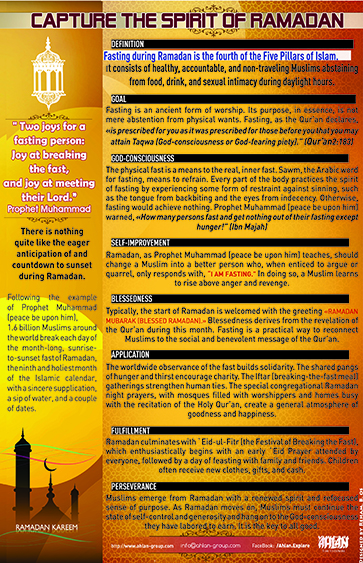
Muslims fast from dawn until dusk during Ramadan. Fasting also prohibits smoking and engaging in sexual intercourse. It has many health benefits, one of which is detoxification.
Suhoor in Ramadan: The Pre-Dawn Meal Before Fasting
As part of daily preparation for fasting, Muslims generally wake up early for sahur (or suhoor), the pre-dawn meal. This light meal, although not mandatory, helps sustain energy throughout the day.
Breaking Fast with Dates in Ramadan is a Prophetic Tradition
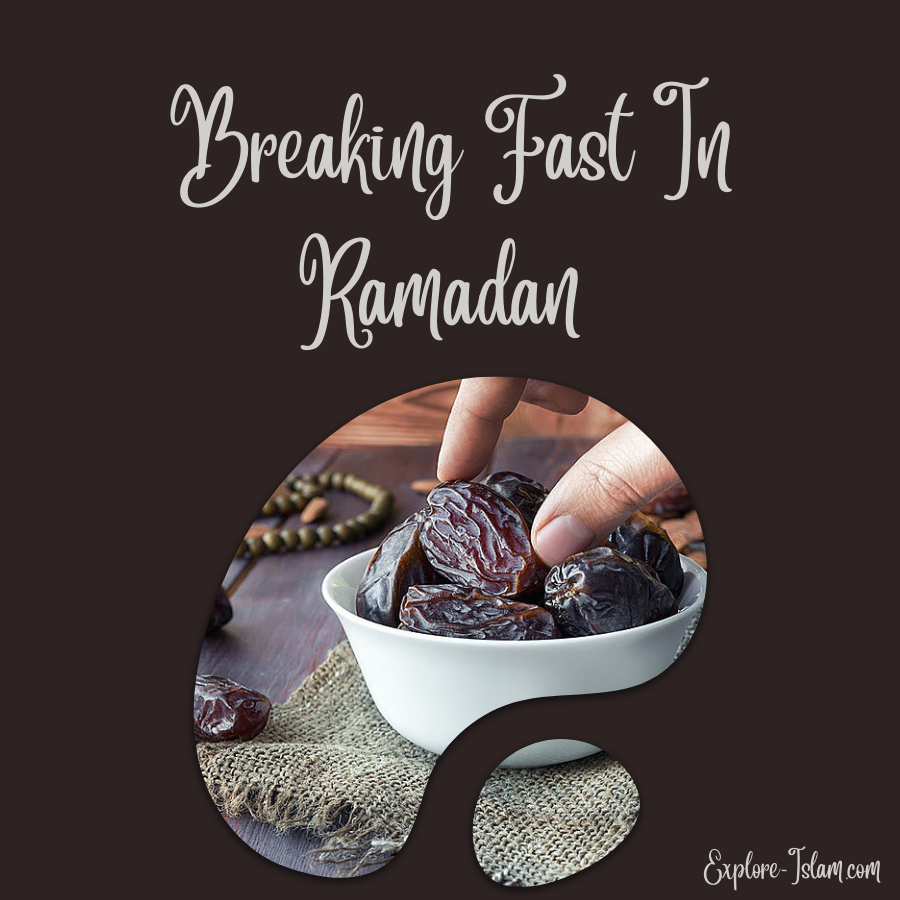
Dates are a staple in Muslims’ diet and lifestyle, especially during Ramadan. They are also believed to be the preferred food with which Prophet Muhammad ﷺ broke his fast.
Anas bin Malik narrated:
“The Messenger of Allah would break the fast with fresh dates before performing Salat. If there were no fresh dates, then with dried dates, and if there were no dried dates, then he would take a few sips of water.”
Ramadan as a Month of Interfaith Understanding
Ramadan is also an opportunity for increased sharing—not only food during iftar, but also knowledge, with the aim of strengthening interfaith dialogue. It is a special time to learn more about and from one another, and questions asked in the spirit of understanding are always welcome.
The Spiritual Purpose of Fasting in Ramadan
Fasting is not only about abstaining from food and water. It is about increasing spirituality through practice, seeking God’s forgiveness more frequently, learning to forgive others, and asking others for forgiveness.
Read more:
When Is Ramadan Celebrated? Understanding Its Date in the Islamic Calendar
Ramadan is the ninth month of the Islamic (Hijri) lunar calendar. Because the Islamic calendar is based on the moon, Ramadan comes about 11 days earlier each year compared to the Gregorian calendar.
Unlike fixed holidays, Ramadan does not have a set date in the Gregorian calendar. It shifts every year because each Islamic month begins with a full cycle of the moon. This lunar system is why the exact dates of Ramadan change annually. However, one thing remains constant: Ramadan is always the ninth month of the Islamic calendar, no matter when it falls in the Gregorian year.
You can learn more about the Islamic New Year
Ramadan Greetings for Non-Muslims
The 2 most common greetings are “Ramadan Mubarak (Blessed Ramadan)!” or “Ramadan Kareem (Generous Ramadan)!
For non-Muslims, you can use both to show courtesy.
Wishing for a blessed, fruitful, and generous time is always good for everyone.
Read also:Ramadan greetings
Ramadan for Non-Muslims: An Etiquette Guide
If you have Muslim friends, paying attention to a few simple points during Ramadan can help avoid misunderstandings and strengthen mutual respect. A good starting point is to try to put yourself in Muslims’ shoes during this special month.
Understanding Muslim Friends During Ramadan
Some Muslims experience small misunderstandings with their non-Muslim friends during Ramadan. Knowing a few basics can make interactions more comfortable for everyone.
Fasting in Ramadan: What Muslims Go Through
We can’t drink coffee—not even water—from dawn until sunset. Still, we’re happy to walk with you if you want to take a break.
Sometimes we may keep a bit of distance when talking. This is often due to halitosis (bad breath) that can occur because we do not eat or drink for the entire day. That’s why we might stand a foot away during conversations.
Sharing the Joy of Iftar: Breaking the Fast Together
You are always welcome to join us for Iftar, the meal with which Muslims break their fast after sundown. We usually make it a big communal gathering, and we genuinely enjoy sharing this happy moment with friends. Your presence is appreciated and warmly welcomed.
This simple awareness helps foster understanding, respect, and meaningful connections during Ramadan—especially between Muslims and non-Muslims.
You may like to take a look at Ramadan eating rules
Can a Non-Muslim Do Ramadan? Ramadan Message for Non-Muslims
Yes, a non-Muslim can observe Ramadan. However, it is important to understand that Ramadan is more than the outward practice of fasting. Ramadan—and fasting itself—is deeply connected to the heart and the inner state of a person.
The deeds of the heart include faith, monotheism and the glorification of God, patience, reliance upon God, obedience to Him, and finding peace and meaning within the heart. These inner acts are at the core of what makes Ramadan spiritually significant for Muslims.
While a non-Muslim may not share the faith aspect—and therefore misses the most essential dimension of Ramadan—participating in the outward experience can still be meaningful. Experiencing the discipline of fasting, the daily rhythm of the month, and the emphasis on self-control and reflection can bring a non-Muslim closer to understanding Islam, Muslims, and what makes Ramadan a unique and transformative time in Muslim life.
Learn More About What is Ramadan
How To Celebrate Ramadan As A Non Muslim?
Celebrating Ramadan as a non-Muslim is a thoughtful way to show respect, build connections, and better understand Muslim friends and communities. Here are some meaningful and practical ways to take part:
Host an Open Iftar Gathering
Consider hosting an open iftar (the meal that breaks the fast). Invite Muslim guests—such as your children’s friends and their families, neighbors, or colleagues—to share the fast-breaking dinner together. This gesture is warmly appreciated and strengthens bonds.
Organize Inclusive Community Events
You can organize community events during Ramadan, such as iftar dinners or charity drives, that are open to everyone. These activities reflect the spirit of generosity and togetherness that defines the month.
Volunteer and Give Back During Ramadan
Encourage your family to volunteer at local food banks, shelters, or community service projects throughout Ramadan. Acts of service and kindness are central values of the month and resonate across faiths.
Join in Fasting and Acts of Goodness
Engaging with your Muslim friends by trying fasting—even for a day—or participating in charitable and good deeds helps deepen understanding and mutual respect. These shared experiences promote empathy and connection.
Connect with the Muslim Community
Ramadan is a time of connection and getting to know one another. Seek opportunities to connect with the Muslim community: eat with Muslims, learn more about Islam, and reflect on spiritual values. For many, Ramadan is also a chance to seek a closer connection with the Creator through reflection and meaningful action.
These simple efforts make Ramadan a bridge for understanding, compassion, and shared humanity between Muslims and non-Muslims.
Conclusion
To conclude, Ramadan for non-Muslims can be a meaningful and eye-opening experience. Fasting in Ramadan is a profound act of worship that carries spiritual, physical, and social dimensions, centered on self-discipline, reflection, and strengthening one’s relationship with God. While fasting is obligatory for healthy adult Muslims from dawn to dusk, the deeper purpose of Ramadan is spiritual growth and conscious living.
Ramadan is the ninth month of the lunar (Hijri) calendar, which is why it comes about 11 days earlier each year. It is also a month of generosity, sharing, and community—values that are easily appreciated and practiced by Muslims and non-Muslims alike.
Key takeaways about Ramadan for non-Muslims:
- Ramadan is about spiritual growth, not just abstaining from food and water.
- Muslims focus on building a stronger relationship with the Almighty One God throughout the month.
- The most common greetings are “Ramadan Mubarak” (Blessed Ramadan) and “Ramadan Kareem” (Generous Ramadan).
- Dates play an important role in Ramadan, especially when breaking the fast.
- Ramadan encourages sharing, kindness, and community bonding.
- Understanding Muslim practices helps avoid misunderstandings and strengthens friendships.
- Non-Muslims can take part by fasting, joining iftar meals, organizing community events, or volunteering at food banks, shelters, or service projects.
Ultimately, whether through learning, sharing meals, volunteering, or simply being considerate, engaging with Ramadan offers non-Muslims a unique opportunity to connect with Muslims, understand Islamic values, and experience the spirit of this blessed month.
Curious for a unique experience? Don’t miss trying these tips in the coming Ramadan! You can learn more about Ramadan through our blog and chat with our agents for learning the simple steps about becoming a Muslim right now!