Ramadan is not only a month of fasting, but a divinely guided season rooted directly in Hadiths and Quran Verses about Ramadan. To truly understand why Ramadan holds such a central place in Muslim life, one must return to its original sources: the Quran and the authentic Hadiths.
In this comprehensive guide, you will explore the exact Quranic verses that established fasting, along with the Prophetic sayings that clarify its status, virtues, and outcomes. Presented in both Arabic and English, these texts allow readers to connect with Ramadan through its original words while understanding their meanings clearly and accurately.
This article follows a clear timeline, beginning with the Quranic revelation of fasting in Surah Al-Baqarah, explaining why fasting was prescribed, who is exempt, the connection between Ramadan and the Quran, and the rules of fasting days and nights. It then moves to the authentic Hadiths of Prophet Muhammad ﷺ, highlighting fasting as a pillar of Islam, a means of forgiveness, intercession on the Day of Judgment, a gateway to Paradise, and a path to attaining true taqwa.
Quran Verses about Ramadan in Arabic and English
The obligation of fasting in Ramadan is not based on tradition alone, but on clear Quranic revelation. In Surah Al-Baqarah, Allah ﷻ dedicates four consecutive verses (183–187) to explain the purpose of fasting, who is exempt, the unique link between Ramadan and the Quran, and the rules governing fasting days and nights. Together, these verses form the complete Quranic foundation of Ramadan.
1. Why Is Fasting Prescribed in Islam?
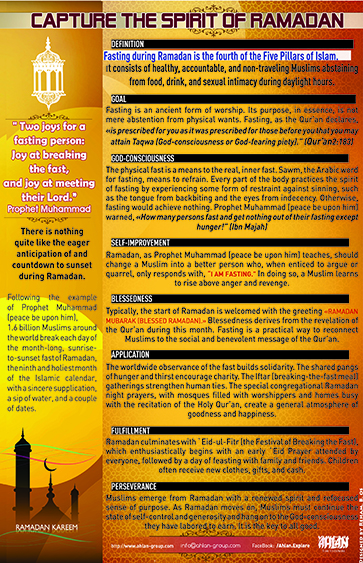
Fasting is introduced in the Quran not merely as a ritual, but as a spiritual discipline rooted in earlier divine laws. Allah ﷻ connects fasting directly to its ultimate objective: taqwa (God-consciousness)—an inner state that reforms behavior, intentions, and character. Almighty God says in the Quran:
يَـٰٓأَيُّهَا ٱلَّذِينَ ءَامَنُوا۟ كُتِبَ عَلَيْكُمُ ٱلصِّيَامُ كَمَا كُتِبَ عَلَى ٱلَّذِينَ مِن قَبْلِكُمْ لَعَلَّكُمْ تَتَّقُونَ
“O believers! Fasting is prescribed for you—as it was for those before you—so perhaps you will become mindful ˹of Allah˺…”
This verse establishes fasting as a universal act of worship, practiced by earlier nations, and clarifies that hunger itself is not the goal—spiritual awareness is. Ramadan fasting trains the believer to rise above physical desires and live with heightened consciousness of Allah in every aspect of life.
Read more: Ramadan Wishes And Greetings
2. Who Is Exempt from Fasting Ramadan?
After establishing the obligation of fasting, the Quran immediately highlights Allah’s mercy and flexibility. Islam recognizes human limitations and provides lawful exemptions without removing the spiritual value of the act. Almighty God says in the Quran:
أَيَّامًۭا مَّعْدُودَٰتٍۢ ۚ فَمَن كَانَ مِنكُم مَّرِيضًا أَوْ عَلَىٰ سَفَرٍۢ فَعِدَّةٌۭ مِّنْ أَيَّامٍ أُخَرَ ۚ وَعَلَى ٱلَّذِينَ يُطِيقُونَهُۥ فِدْيَةٌۭ طَعَامُ مِسْكِينٍۢ ۖ فَمَن تَطَوَّعَ خَيْرًۭا فَهُوَ خَيْرٌۭ لَّهُۥ ۚ وَأَن تَصُومُوا۟ خَيْرٌۭ لَّكُمْ ۖ إِن كُنتُمْ تَعْلَمُونَ
“˹Fast a˺ prescribed number of days. But whoever of you is ill or on a journey, then ˹let them fast˺ an equal number of days ˹after Ramaḍân˺. For those who can only fast with extreme difficulty, compensation can be made by feeding a needy person ˹for every day not fasted˺. But whoever volunteers to give more, it is better for them. And to fast is better for you, if only you knew.”
The option mentioned for those who could feed instead of fasting was later abrogated, as fasting became obligatory for all who are able, while exemptions remained for illness and travel. This verse balances obligation with compassion, showing that Islamic law never ignores genuine hardship.
Read: Rules Of Ramadan For Non-Muslims
3. Ramadan: The Month of Quran Revelation
This verse reveals the heart of Ramadan—its direct connection to the revelation of the Quran. It also confirms the final ruling that fasting is mandatory for those who witness the month, while still maintaining ease for those with valid excuses. Almighty God says in the Quran:
شَهْرُ رَمَضَانَ ٱلَّذِىٓ أُنزِلَ فِيهِ ٱلْقُرْءَانُ هُدًۭى لِّلنَّاسِ وَبَيِّنَـٰتٍۢ مِّنَ ٱلْهُدَىٰ وَٱلْفُرْقَانِ ۚ فَمَن شَهِدَ مِنكُمُ ٱلشَّهْرَ فَلْيَصُمْهُ ۖ وَمَن كَانَ مَرِيضًا أَوْ عَلَىٰ سَفَرٍۢ فَعِدَّةٌۭ مِّنْ أَيَّامٍ أُخَرَ
“Ramaḍân is the month in which the Quran was revealed as a guide for humanity with clear proofs of guidance and the standard ˹to distinguish between right and wrong˺. So whoever is present this month, let them fast. But whoever is ill or on a journey, then ˹let them fast˺ an equal number of days ˹after Ramaḍân˺. Allah intends ease for you, not hardship.”
Ramadan is not only a month of fasting, but a season of guidance, gratitude, and spiritual renewal through the Quran. Fasting Ramadan is an act of thankfulness for divine guidance, rooted in Allah’s mercy and desire for ease.
Read: What is Ramadan?
4. Rules of Ramadan Nights
After clarifying the daytime obligations, the Quran explains what is permissible and prohibited during Ramadan nights, setting clear boundaries that protect both worship and human needs. Almighty God says in the Quran:
أُحِلَّ لَكُمْ لَيْلَةَ ٱلصِّيَامِ ٱلرَّفَثُ إِلَىٰ نِسَآئِكُمْ ۚ هُنَّ لِبَاسٌۭ لَّكُمْ وَأَنتُمْ لِبَاسٌۭ لَّهُنَّ
“It has been made permissible for you to be intimate with your wives during the nights preceding the fast… These are the limits set by Allah, so do not exceed them. This is how Allah makes His revelations clear to people, so they may become mindful ˹of Him˺.”
This verse illustrates how Islam regulates worship with clarity, balance, and moral boundaries, even in the most personal aspects of life. Ramadan is a discipline of self-control by day and lawful balance by night, all within the clear limits set by Allah.
To sum up, these four Quranic verses present Ramadan as a complete system of worship—grounded in purpose, mercy, guidance, and discipline—leading the believer toward taqwa and gratitude through fasting and the Quran.
Read:
Hadith about Ramadan in Arabic and English
The Sunnah of Prophet Muhammad ﷺ further explains the status, virtues, and spiritual impact of fasting Ramadan. Through authentic Hadiths, we learn that Ramadan fasting is not only obligatory, but also a means of forgiveness, protection, intercession, and entrance into Paradise. The following Hadiths highlight the most important dimensions of Ramadan in Islam.
1. Fasting Ramadan Is One of the Pillars of Islam
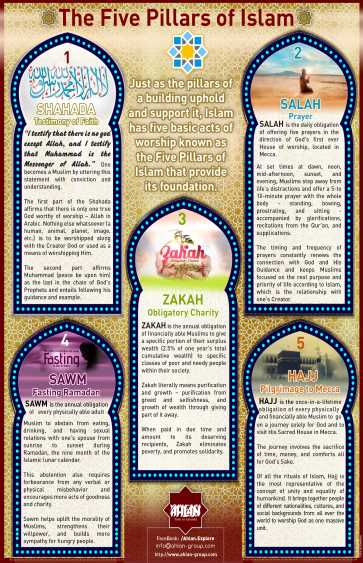
Islam is built upon essential acts of worship that define a Muslim’s faith and practice. Among these foundational five pillars of Islam is fasting the month of Ramadan, confirming its central place in Islamic belief and law. Prophet Muhammad (PBUH) says:
بنى الإسلام على خمس : شهادة أن لا إله إلا الله ، إقام الصلاة ، إيتاء الزكاة ، وصوم رمضان وحج البيت لمن استطاع إليه سبيلا
“Islam is based on five pillars: the testimony that there is no god but Allah and that Muhammad (PBUH) is the Messenger of Allah, establishing prayer, paying Zakat, and fasting Ramadan.”(Bukhari & Muslim)
This Hadith establishes fasting Ramadan as an obligatory act of worship, equal in rank to prayer and charity. Observing Ramadan fasting is not optional devotion, but a core duty that defines Islamic faith and submission to Allah.
2. Fasting Ramadan Leads to Forgiveness of Sins
One of the greatest blessings of Ramadan is the forgiveness of sins. Through sincere fasting combined with faith and hope in Allah’s reward, past sins are erased—provided major sins are avoided. Prophet Muhammad (PBUH) says:
الصلاة إلى الصلاة ، والجمعة إلى الجمعة ورمضان إلى رمضان ، مكفرات لما بينهما ما لم ترتكب الكبائر
The Messenger of Allah (PBUH) said,
“The five daily prayers, one Friday prayer to the next, and Ramadan to Ramadan are expiation for what is between them, so long as major sins are avoided.”(Muslim)
Also, forgiveness in Ramadan is tied not merely to abstention from food, but to faith, sincerity, and conscious obedience. Prophet Muhammad (PBUH) says:
من صام رمضان إيمانا واحتسابا ، غفر له ما تقدم من ذنبه
“Whoever fasts Ramadan out of faith and seeking reward from Allah, his past sins will be forgiven.”(Al-Bukhari & Muslim)
Thus, Ramadan fasting renews the believer spiritually, offering a fresh start cleansed from past sins.
Read: The Last Ten Days of Ramadan
3. Fasting Leads to Entrance into Paradise
Islam promises Paradise to those who fulfill their obligations sincerely. Fasting Ramadan, along with lawful conduct and prayer, is a direct path to Jannah.
سأل رجل رسول الله ﷺ: إذا صليت الصلاة المفروضة، وصمت رمضان، وأحللت الحلال، وحرمت الحرام، أأدخل الجنة؟! فأجابه: نعم
Prophet Muhammad (PBUH) was asked: “Shall I enter Paradise if I observe the obligatory prayers, fast Ramadan, treat lawful what Allah has made lawful, and avoid what He has forbidden?”
The Prophet replied, “Yes.”[Sahih Muslim]
This Hadith emphasizes consistency in obligatory acts rather than excessive voluntary worship. Fasting Ramadan sincerely, along with obedience to Allah’s commands, guarantees success in the Hereafter.
Read: Duas of Ramadan
4. Fasting and the Quran Intercede on the Day of Resurrection
On the Day of Judgment, deeds will speak on behalf of believers. Among the greatest intercessors are fasting and the Quran, both central acts of Ramadan. Prophet Muhammad (PBUH) says:
الصيام والقرآن يشفعان للعبد يوم القيامة، يقول الصيام: أي رب، إني منعته الطعام في النهار فشفعني فيه، ويقول القرآن: منعته النوم بالليل فشفعني فيه، فيشفعان
“Fasting and the Quran will intercede for a servant on the Day of Resurrection. Fasting will say: ‘O Lord, I kept him away from food and desires during the day.’ The Quran will say: ‘I kept him from sleeping at night.’ Their intercession will then be accepted.”(Sahih Al-Jami’)
Ramadan transforms worship into living testimony that defends the believer before Allah. Fasting is not temporary hunger—it becomes eternal advocacy in the Hereafter.
Read: Events and Activities During Ramadan
5. Ar-Rayyan: A Special Gate in Paradise for Those Who Fast
Allah honors fasting Muslims with a unique gate in Paradise, reserved exclusively for them. Prophet Muhammad (PBUH) says:
إن في الجنة بابا يقال له الريان، يقال له يوم القيامة: أين الصائمون؟ من دخله لم يظمأ بعده أبدا
“In Paradise there is a gate called Ar-Rayyan. On the Day of Resurrection it will be said: ‘Where are those who used to fast?’ They will enter through it, and once they enter, it will be closed, and none will enter through it after them.”(Sahih Sunan an-Nasa’i / 2237)
This exclusive honor reflects how fasting during Ramadan grants believers a unique reward unmatched by any other act.
6. Ramadan: The Best Month of the Year
Ramadan is a month of multiplied rewards, forgiveness, mercy, and liberation from Hellfire. During it, the spiritual atmosphere of the believer is entirely transformed. Prophet Muhammad (PBUH) says:
إذا كان أول ليلة من شهر رمضان صفدت الشياطين…
“When the first night of Ramadan begins, the devils are chained, the gates of Hell are closed, and the gates of Paradise are opened… and Allah frees people from the Fire every night.”
Also, no other month combines mercy, forgiveness, and reward like Ramadan. Prophet Muhammad (PBUH) says:
أتاكم رمضان؛ شهر مبارك…
“There has come to you Ramadan, a blessed month which Allah has enjoined you to fast… Whoever is deprived of its goodness is truly deprived.”
(Sunan an-Nasa’i / 2106)
Ramadan is a divinely prepared season for repentance, growth, and salvation.
Read: How to change in Ramadan
7. Taqwa Is the Core Outcome of Fasting
The ultimate goal of fasting is taqwa—self-restraint, moral discipline, and consciousness of Allah reflected in behavior. Prophet Muhammad (PBUH) says:
إذا كان صوم أحدكم فلا يرفث ولا يصخب… فليقل إني صائم
“When one of you is fasting, he should avoid obscene speech and anger. If someone insults him, let him say: ‘I am fasting.’”(Bukhari & Muslim)
True fasting controls the tongue, temper, and conduct, not only the stomach. Fasting Ramadan refines character, cultivates patience, and produces lasting taqwa.
Read: Ramadan Eating Rules
Conclusion
To conclude, the teachings of Ramadan in Islam are firmly established through clear Quranic verses and authentic Hadiths, which together define fasting as a divine obligation, a source of mercy, and a path to spiritual growth. By reflecting on these primary sources, Muslims gain a deeper understanding of Ramadan’s purpose, rules, and lasting impact on faith and character.
Summary of the main concepts mentioned in the Quran verses and Hadiths:
- Fasting is divinely prescribed in Surah Al-Baqarah as an obligation aimed at achieving taqwa (God-consciousness).
- Fasting was practiced by previous nations, showing its universal role in spiritual discipline.
- Legitimate exemptions are granted for illness and travel, reflecting Allah’s mercy and intention of ease.
- Ramadan is the month of Quran revelation, linking fasting with guidance, gratitude, and worship.
- Clear rules govern fasting days and nights, defining lawful and prohibited actions during Ramadan.
- Fasting Ramadan is a pillar of Islam, essential to a Muslim’s faith and practice.
- Sins are forgiven through sincere fasting, when done with faith and seeking Allah’s reward.
- Fasting and the Quran intercede for the believer on the Day of Resurrection.
- A special gate in Paradise (Ar-Rayyan) is reserved exclusively for those who fast.
- Ramadan is the most blessed month, marked by opened gates of Paradise, closed gates of Hellfire, and multiplied rewards.
- The ultimate outcome of fasting is taqwa, reflected in self-control, good manners, and righteous conduct.
Curious to learn more about the final divine message of the Quran and its miraculous effect on souls, especially in Ramadan? Start a WhatsApp conversation with our team right now for more fruitful discussions!