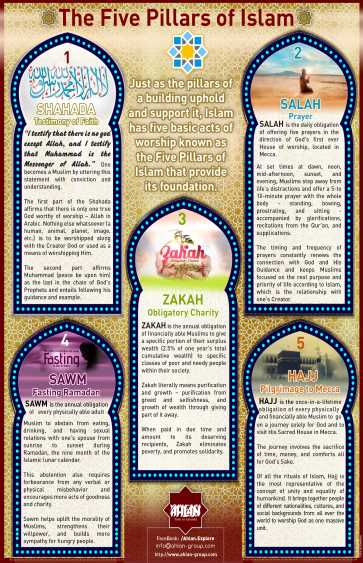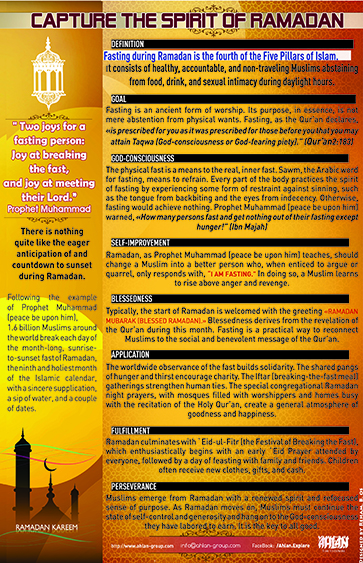
Can you eat wisely, stay healthy, and still fast correctly in Ramadan? Eating during Ramadan should follow practical tips that support both physical wellbeing and spiritual growth. This guide helps you understand how fasting works in Islam while maintaining valid and healthy eating habits. During this blessed month, eating and drinking are prohibited from dawn to sunset, as fasting is one of the Five Pillars of Islam and a central act of worship that strengthens faith and self-discipline.
Below, we address the top questions that often arise about eating during Ramadan, helping you observe the fasting day correctly, confidently, and in a health-conscious way.
When can you eat during Ramadan?
Eating time during Ramadan starts after sunset time till the downtime of the next day. In other words, from dawn to sunset.
You may˺ eat and drink until you see the light of dawn breaking the darkness of night, then complete the fast until nightfall.
What to eat before fasting in Ramadan?
The pre-dawn meal consumed by a Muslim before starting the day’s fast is called Suhoor (also spelled sahūr).” Suhoor is arguably the most important element of a successful day’s fast.
Since a well-balanced meal will provide you with the necessary energy to maintain your fitness level throughout the day. So, our Prophet (PBUH) recommended this meal as the most important one during Ramadan.
Anas reported that Prophet Muhammad said:
“Take a meal a little before dawn, for there is a blessing in taking a meal at that time.”
What are Ramadan eating rules?
Ramadan eating rules focus on following the Sunnah, eating in moderation, and choosing foods that support healthy fasting. Key guidelines include:
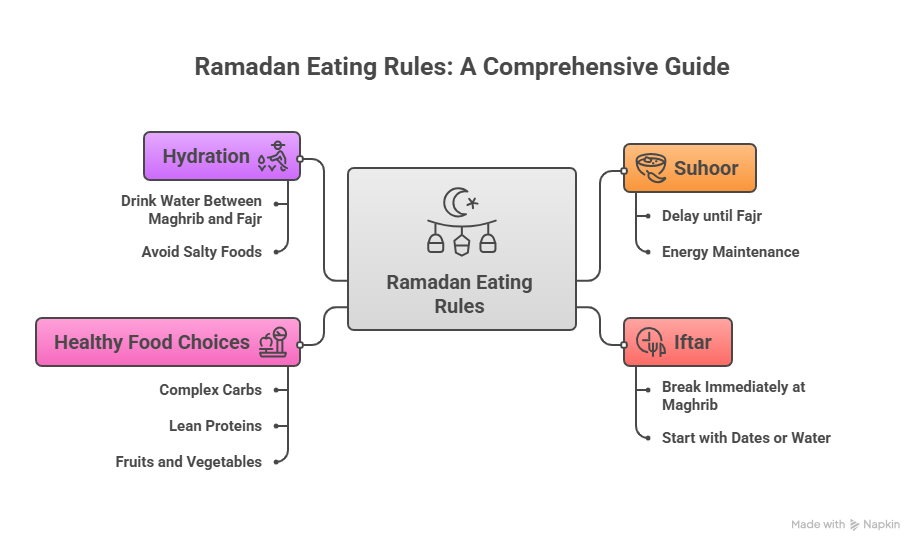
- Delay Suhoor until just before Fajr, as this is from the Sunnah and helps maintain energy throughout the day.
- Break the fast immediately at Maghrib, following the Hadith: “People will continue to adhere to good as long as they hasten to break the Saum (fasting).” (Hadith)
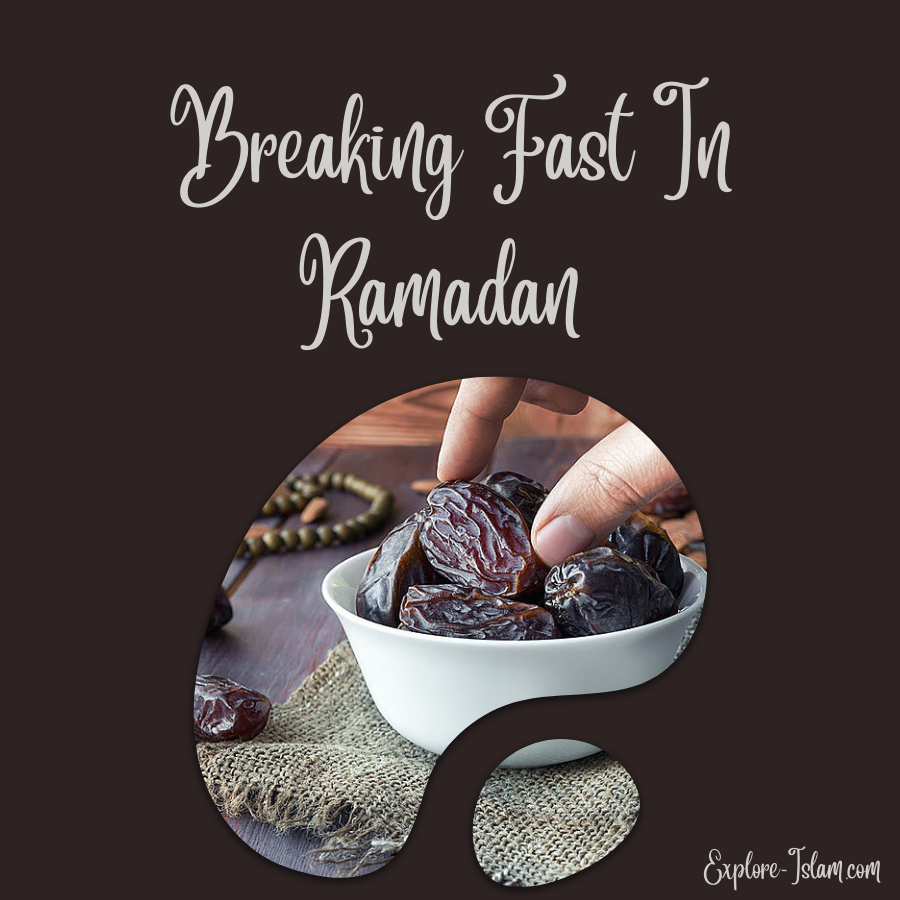
- Start Iftar with dates or water before eating the main meal, following the Prophet’s practice.
- Avoid overeating, since moderation supports better digestion and prevents fatigue.
- Choose healthy, balanced foods at Iftar and Suhoor (complex carbs, lean proteins, fruits, vegetables).
- Stay hydrated between Maghrib and Fajr, drinking enough water to prevent dehydration.
- Limit heavy, fried, and salty foods, especially at Suhoor, as they increase thirst and tiredness.
Learn more about Ramadan: Hadiths and Quran Verses about Ramadan
What happens if you accidentally eat during Ramadan?
If the fasting person eats or drinks accidentally because of forgetfulness, then he does not break his fast.
Abu Hurayrah (may Allaah be pleased with him) said: The Prophet (peace and blessings of Allah be upon him) said:
“Whoever forgets he is fasting and eats or drinks, let him complete his fast for it is Allah Who has fed him and given him to drink.”
Can a woman eat in Ramadan during her period?
Yes. The scholars unanimously agreed that it is forbidden for a menstruating woman to fast during Ramadan and that she has to make up the days that she misses because of menstruation, so eating on period time during Ramadan is permissible.
Read also:
What is the traditional Ramadan food?
Traditional Ramadan food centers on following the Sunnah of breaking the fast with dates or water, followed by a balanced, nourishing Iftar meal.
Breaking the fast with fresh dates, dried dates, or water is a desirable Sunnah—not an obligation.The fasting person may break their fast with any wholesome food they choose.
Anas reported that the Prophet ﷺ used to break his fast before praying with fresh dates; if none were available, he would eat dried dates, and if none were available, he would drink a few sips of water.
After following this Sunnah, Muslims typically enjoy a healthy Iftar that includes complex carbohydrates, vegetables, fruits, proteins, water, and mineral-rich foods to restore energy and support the body during Ramadan.
To experience healthy fasting and keep your health, consider the following tips and choices:
| Meal | Focus | Smart Choices |
| Suhoor | Sustained energy & hydration | Oats, eggs, yogurt, whole grains, fruits, nuts |
| Iftar | Gentle digestion & balance | Dates, water, soup, fish/chicken, veggies |
| Avoid | Dehydration & sugar spikes | Fried foods, sweets, salty snacks |
Related Articles: How to lose weight during Ramadan?
Can You Eat Gum During Ramadan?
No, it is prohibited to eat gum during the day of Ramadan because it will annul your fasting. Still, on Ramadan night, you can eat gum, as the time of fasting is from dawn to sunset.
Read more:
What is Ruling on Taking Medication?
It is permissible for a fasting person to take non-nutritious medication injections—whether intramuscular or intravenous—during the day in Ramadan.
However, it is not permissible to take nutritional injections during fasting hours. Anything that acts like food or drink, or serves the purpose of nourishment, breaks the fast.
If a doctor determines that medication must be taken during the day and it affects the fast, then it is permissible to break the fast on those days and make them up after Ramadan.
What are the things that do not invalidate the fast?
Fasting is not broken unless a deliberate nourishing substance, medicine, or similar material enters the body cavity (such as the stomach or brain) through a natural opening—or by sexual intercourse, or by the start of menstruation/postnatal bleeding.
Everything outside these cases does not invalidate the fast.
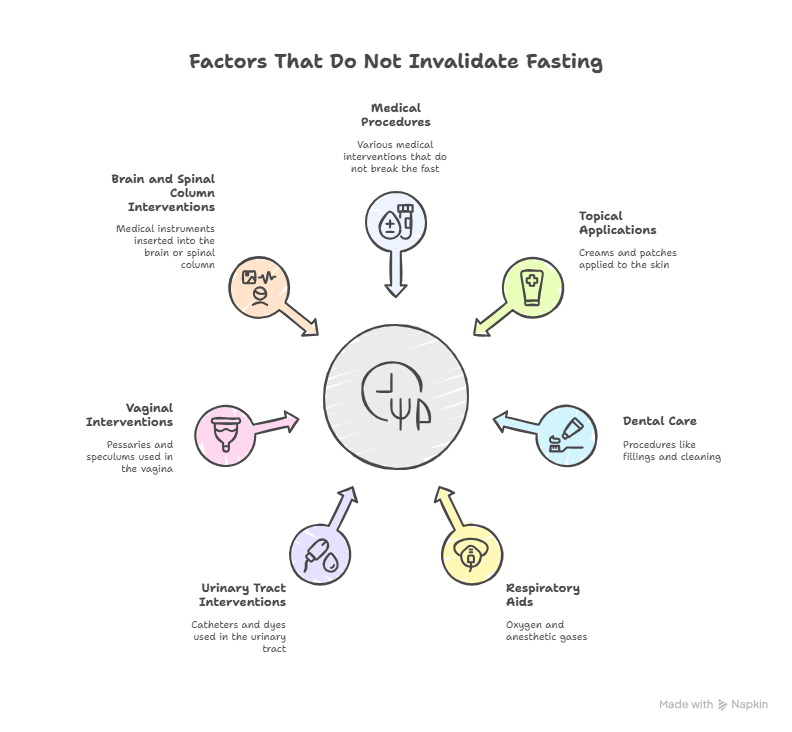
Below are examples of things that do not break the fast:
- Enemas, eyedrops, eardrops, tooth extraction, and treatment of injuries.
(Majmu’ Fatawa Shaykh al-Islam, 25/233; 25/245) - Medical tablets placed under the tongue for asthma or similar conditions, as long as nothing is swallowed.
- Insertion of anything into the vagina, such as pessaries, a speculum, or the doctor’s fingers for examination.
- Insertion of medical instruments into the womb.
- Anything entering the urinary tract of males or females (catheters, medical scopes, dyes used for x-rays, medicine, or bladder-washing solutions).
- Dental fillings, extractions, or cleaning, whether using a siwak or toothbrush, as long as nothing is swallowed.
- Rinsing the mouth, gargling, or sprays, provided nothing reaches the throat.
- Oxygen or anesthetic gases, as long as they do not provide nourishment.
- Substances absorbed through the skin, such as creams, ointments, or patches.
- Insertion of a fine tube into the veins for diagnostic imaging or treatment in the heart or other body parts.
- Laparoscopy (inserting a scope through the stomach wall) to examine the intestines through surgery.
- Taking liver samples or biopsies from any part of the body, as long as no solutions are administered.
- Endoscopy, as long as no nourishing solutions are introduced.
- Introduction of medical instruments or materials into the brain or spinal column.
Read: Dua during Ramadan
Conclusion
To conclude, understanding when and what to eat during Ramadan helps Muslims observe fasting correctly while maintaining good health and spiritual focus. By following clear Ramadan eating rules and making mindful food choices at suhoor and iftar, fasting becomes a balanced act of worship that nurtures both body and soul.
The article answers the Most Common Questions About Eating During Ramadan:
- When can you eat during Ramadan? You may eat between sunset (iftar) and dawn (suhoor) only.
- What happens if you eat during Ramadan? Deliberate eating breaks the fast and requires making up the day (qada’).
- What time can I eat during Ramadan? After sunset until dawn begins.
- Can you eat during Ramadan on your period? Yes. Women on their period do not fast and must make up missed days later.
- Foods to eat during Ramadan: Whole grains, protein, fruits, vegetables, healthy fats, and plenty of fluids.
- What happens if you accidentally eat during Ramadan? The fast remains valid; continue fasting once you remember.
- What to eat before fasting Ramadan (suhoor): Slow-digesting foods like oats, eggs, yogurt, fruits such as dates, and water.
- Best foods to eat during Ramadan: Balanced meals with protein, fiber, complex carbs, and hydration.
- Can you eat gum during Ramadan? Chewing gum breaks the fast according to most scholars.
By following these guidelines, eating during Ramadan becomes simpler, healthier, and fully aligned with Islamic teachings.
Whether you are exploring Islam, fasting alongside Muslim friends, or simply interested in the meaning behind Ramadan, we invite you to discover its spiritual wisdom, health benefits, and universal values of self-discipline and compassion. Start a conversation with our team right now for better guidance and supportive discussion!