Muslims all over the world have and will always honor the month of Rajab. It’s often seen as the spiritual gateway to Ramadan and a season when believers naturally seek clarity about its virtues, rulings, and authentic practices. As one of the Four Sacred Months, Rajab carries heavier rewards, heightened sanctity, and a rich historical legacy—yet it is also surrounded by widespread misconceptions that need clear, evidence-based guidance.
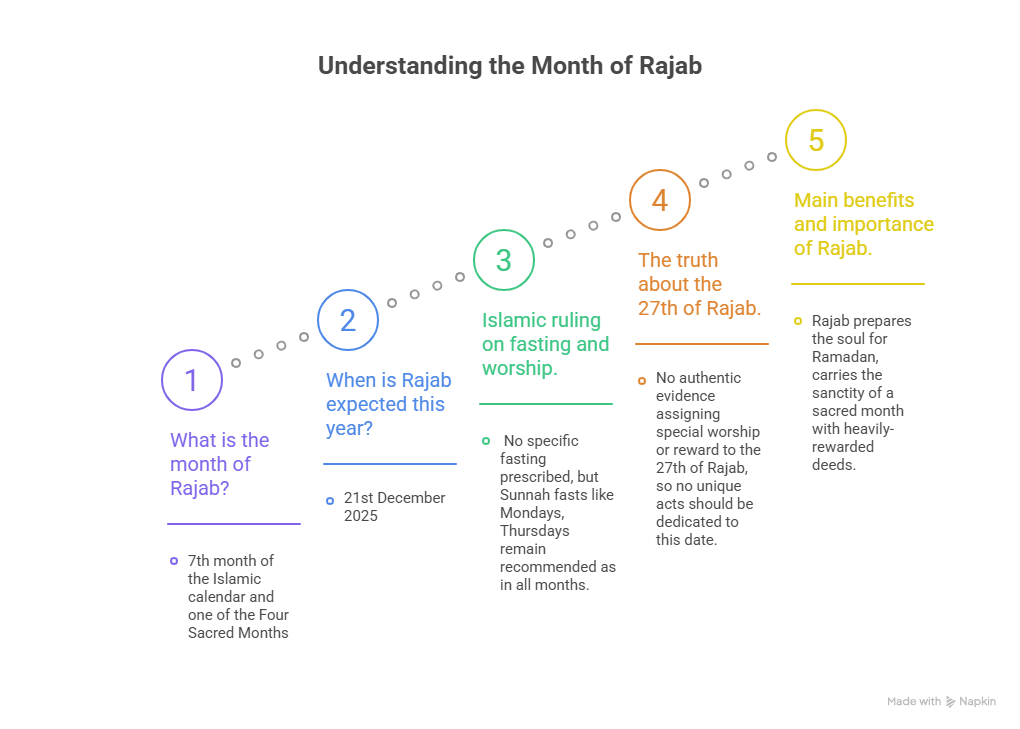
In this article, you will learn what the month of Rajab is, when it is expected to come this year, the correct Islamic ruling on fasting and worship during Rajab, the truth about the 27th of Rajab, and its main benefits and importance as a sacred month. So, here we go…
What is the month of Rajab?
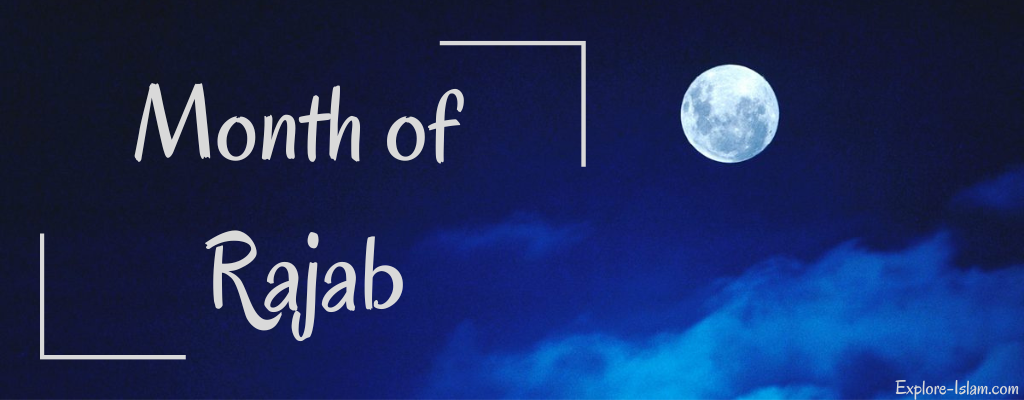
Rajab is the seventh month of the lunar-based Islamic calendar. The name Rajab comes from the Arabic root “Tarjeeb,” meaning glorification, reflecting the great honor historically associated with this month.
Rajab is one of the Four Sacred Months in Islam. These months were respected even before Islam and were reaffirmed by the Prophet Muhammad (PBUH) in the famous hadith:
“…The year is twelve months, four of which are sacred. Three of them are in succession: Dhul-Qa’da, Dhul-Hijja, and Al-Muharram; and the fourth is Rajab Mudar (named after the tribe of Mudar who used to honor this month), which is between Jumada (al-Thani) and Sha‘ban.”
In this narration, three of the sacred months are consecutive—Dhul-Qa‘dah, Dhul-Hijjah, and Al-Muharram—while Rajab stands alone, which is why it is often called “Rajab al-Fard” (Rajab the Separate One).
Before Islam, most Arab tribes respected the sacred months by suspending fighting and travel dangers. The Mudar tribe, in particular, strongly upheld the sanctity of Rajab, strictly observing its cease-fire. For this reason, the month became known as “Rajab of Mudar.”
Rajab remains honored in Islam as a sacred month.
When is Rajab 2025-2026?
The Islamic month of Rajab is expected to start on the 21st of December 2025 and will end on the 19th of January 2026, based on the lunar system of this year.
What is special about the month of Rajab?
The month of Rajab is basically special due to it being:
- One of the four sacred months when both good deeds and bad deeds are deemed heavier than in other months of the year.
- Preparatory month for Ramadan, a great chance of salvation and reformation.
Still, there is no authentic Prophetic hadith highlighting a special merit or virtue for a specific act of worship in Rajab. Thus, doing a specific act of worship in Rajab, believing in a specific virtue for it, is a condemned innovation (bid’aa).
What are the Benefits and importance of the month of Rajab?
There are several key benefits and virtues associated with the month of Rajab, both as one of the Four Sacred Months and as a spiritual gateway leading up to Ramadan.
The month of Rajab is of spiritual preparation for Ramadan
Rajab helps prepare the Muslim soul for making the best use of Ramadan, as starting extra good deeds earlier makes major spiritual changes easier and increases the chance of attaining salvation in Ramadan.
Rajab is one of the Four Sacred Months in Islam
Rajab is honored in the Quranic command: “So do not wrong yourselves during these months.” (Quran 9:36), meaning sins are more serious and rewards for good deeds are deemed heavier.
Rajab is a time of safety for travel and pilgrimage
Like the other sacred months, Rajab historically ensured safe travel—especially for those performing Hajj or Umrah—though it is important to note that Rajab itself is not one of the months of Hajj. Also, the cessation of war means not initiating wars for the spread of religion. However, this rule does not apply to resuming a legitimate war already started before Rajab or to deter those who transgress on Muslim land.
Stricter consequences for transgression in Rajab
Some scholars held the opinion that Diyyah (blood money) is increased by one-third if a murder takes place during a sacred month, as the crime violates both the sanctity of life and the sanctity of Allah’s cease-fire.
There are several benefits of the month of Rajab as one of the sacred months and as one coming close to Ramadan:
- Rajab helps prepare the Muslim soul for making the best use of Ramadan, as starting extra good deeds earlier makes major spiritual changes easier and increases the chance of attaining salvation in Ramadan.
- Rajab is one of the “Four Sacred Months” in Islam, as stated in this Ayah of the Quran: “So do not wrong yourselves and one another during these months [i.e., the four sacred months].” (Quran 9:36)
- During Rajab safe travel is ensured for everyone especially pilgrims, while traveling going on their Major Hajj or minor Hajj (Umrah), same as during the other three sacred months. However, it’s important to note that Rajab is not of the months of hajj. The cessation of war means not initiating wars for the spread of religion. However, this rule does not apply to resuming a legitimate war already started before Rajab or to deter those who transgress on Muslim land.
- Some Muslim scholars hold the opinion that Diyyah (Blood money) is increased by a third if the murder took place during a sacred month; as it is not only a major sin of murder but also violating Allah’s cease fire.
Are rewards and punishments multiplied in Rajab?
Muslim scholars have expressed two views on the multiplication of rewards and punishments in the sacred months, including Rajab. The stronger and more correct opinion, supported by clear Quranic evidence, is that there is no multiplication in quantity but in gravity. Other scholars agreed on literal multiplication of both good deeds and bad deeds in Rajab.
The quantity of sins is not multiplied. A person is not given “more sins” than what they committed. Almighty One God highlights the main rule of accounting, saying:
“Whoever comes with a good deed will be rewarded tenfold. But whoever comes with a bad deed will be punished for only one. None will be wronged.”
This verse confirms that the number of sins does not increase.
The severity and seriousness of the sin—not the number. Scholars say that in Makkah (and similarly in sacred months) the sin becomes heavier in quality, not quantity. In other words:
- The punishment is more painful or more serious, because the violation happened in a more honored time or place.
- The reward of good deeds is also greater, because the worship was done in a sacred moment or location.
What is special about the 27th of Rajab fasting and other worship?
There is nothing authentically special about the day or night of the 27th of Rajab. No Quranic verse, no authentic Prophetic hadith, and no verified action of the Prophet ﷺ mention a specific worship, virtue, or reward tied to this day or night.
Because Muslims base their beliefs and acts of worship on authentic evidence from the Prophet ﷺ, it is not allowed to innovate special prayers, fasting, celebrations, or rituals specifically for the 27th of Rajab.
However, if a Muslim normally performs good deeds—such as voluntary fasting, general night prayer, giving charity, or reciting Quran—and these actions happen to fall on this day without associating them with a special virtue, then there is no problem. These acts remain valid based on their general Islamic legitimacy, not because of the date itself.
Ibn al-Qayyim, the famous Muslim scholar, emphasized this clearly, saying:
“Every hadith that speaks about fasting in Rajab or praying on certain nights of it is fabricated and falsely attributed.”
al-Manār al-Munīf (p. 96)
In other words, the 27th of Rajab is not a day of special worship, but regular good deeds remain acceptable as long as no special intention is attached to this date.
Fasting during the month of Rajab
There is no authentic evidence that makes fasting in the month of Rajab extra special on its own. The only distinction of this month is that it is one of the four sacred months, during which the reward of all good deeds is multiplied.
Therefore, it is Sunnah—during any Islamic month, including the sacred ones such as Rajab—to fast on Mondays and Thursdays, as well as the three white days: the 13th, 14th, and 15th of each lunar month.
This is based on the Hadith in Sunan An-Nasa’i, where the Prophet ﷺ said:
“If you want to fast at any time during the month, then fast on the thirteenth, fourteenth, and fifteenth.”
Because Rajab is a sacred month, it is always a good time to increase voluntary worship—such as fasting, charity, night prayers, Quran recitation, and all good deeds—seeking the greater rewards Allah bestows during these honored days.
Conclusion
To conclude, the month of Rajab is a sacred period in Islam with general virtue and spiritual importance, yet it carries no specific acts of worship that are uniquely prescribed for it. Understanding the month of Rajab correctly helps Muslims maximize authentic good deeds while avoiding innovations. This article covers the following points:
- What is the month of Rajab?
It is the seventh month of the Islamic calendar and one of the Four Sacred Months, honored for its sanctity and heavier rewards. - What are the benefits and importance of the month of Rajab?
Rajab prepares the soul for Ramadan, carries the sanctity of a sacred month with heavily-rewarded deeds, ensured safety in pre-Islamic travel, and—according to some scholars—may increase Diyyah due to its sanctity. - What is special about the 27th of Rajab fasting and other worship?
There is no authentic evidence assigning special worship or reward to the 27th of Rajab, so no unique acts should be dedicated to this date. - Fasting during the month of Rajab
Rajab has no specific fasting prescribed, but Sunnah fasts like Mondays, Thursdays, and the white days remain recommended as in all months.
This month is a good opportunity to grow closer through small, consistent acts of worship.